Big Bend Protection Alliance
Update: 16 Wall Segments Removed
Wall Projects Cut from Big Bend. More to Go.
Your calls, your letters, your pressure worked. CBP has removed 2 planned wall projects from its border map — the Alpine Primary Wall (BBT-4) and the Alpine/Sanderson/Comstock Primary Wall (BBT-5), both in Texas — and reduced the planned scope of 2 others in San Diego and El Centro, California. But Big Bend Ranch State Park and other areas are still on the chopping block, and the waivers haven't been rescinded. We're not done yet.
Defend Big Bend is where conservation groups, cultural heritage organizations, and community members come together to keep Big Bend wild. See the updated map.
supporters for Big Bend conservation
Live from Change.org · updates every 60s
See What Changed
Drag the slider to compare planned wall routes before and after CBP's March 2026 update.
Orange dashed lines represent planned wall routes. Drag the slider to compare before and after.
What's at Stake
The proposed wall doesn't just draw a line on a map. It may permanently alter ecosystems, cultural heritage sites, and public access to some of America's most treasured landscapes.
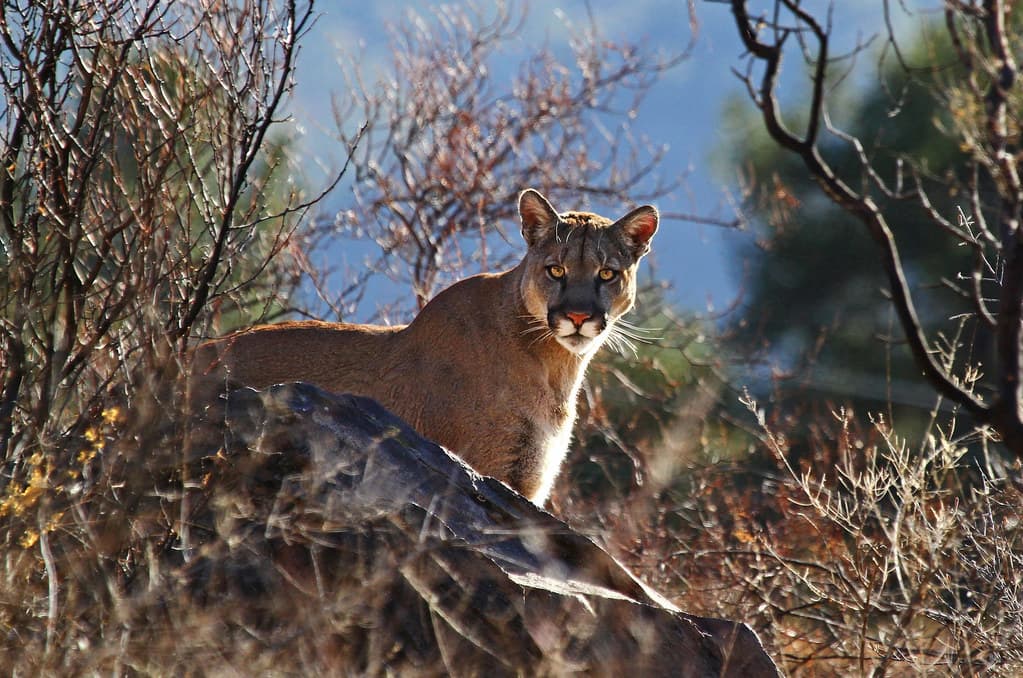
Wildlife Corridors Severed
Mountain lions, Mexican black bears, and dozens of migratory species depend on unbroken corridors across the Rio Grande. A steel bollard wall would permanently block thousands of years of natural migration routes.
Sacred Landscapes Industrialized
Santa Elena Canyon, Big Bend Hot Springs, the Hoodoos & Balanced Rock Trail — iconic landmarks that draw visitors from around the world could face closure or disruption from wall construction and access roads. No environmental impact study has been conducted thanks to the waiver of 28 federal laws.
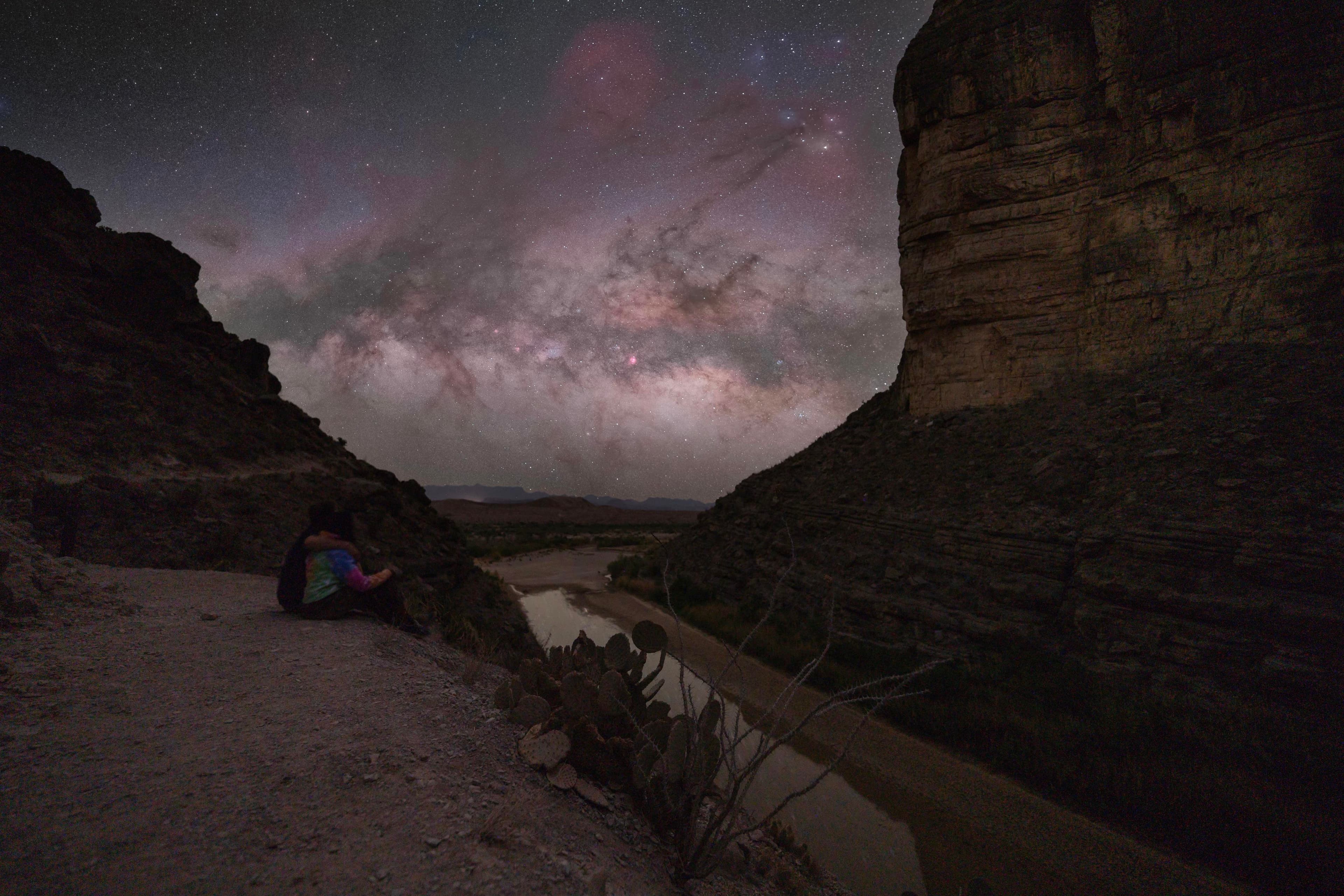
Dark Skies Under Threat
Big Bend holds an International Dark Sky Association designation. The proposed "Smart Wall" infrastructure — surveillance towers, lighting systems, and sensor arrays — would permanently degrade one of the last pristine night skies in North America.
Big Bend by the Numbers
Big Bend is one of the most remote, lowest-traffic border zones in the entire United States. These statistics, drawn from CBP data, provide context for understanding the region.
From Nearest US Town
Big Bend National Park is over 100 miles from the nearest American town. The remote terrain and harsh environment naturally limit cross-border activity in this region.
Encounters This Fiscal Year
Out of nearly 28,000 encounters logged across the entire southwest border this fiscal year, only 734 were in the Big Bend Sector — just 2.6%. Rio Grande Valley saw 5,800. El Paso saw 4,900.
Of All Southwest Border Encounters
The Big Bend Sector accounts for just 2.6% of all southwest border encounters — 734 out of nearly 28,000. The sector covers 517 miles, yet it sees far fewer encounters than Rio Grande Valley and El Paso.
Big Bend’s All-Time High (FY 2023)
The highest encounters ever recorded in the Big Bend Sector was roughly 12,000 for all of FY 2023. For comparison, other sectors have recorded that many in a single day.
The Proposed Wall Route
Compare the planned wall routes before and after CBP's March 2026 update. Drag the slider to see which segments were removed.
Orange dashed lines represent planned wall routes. Drag the slider to compare before and after.
“This landscape doesn’t need to be spoiled in order to solve a problem it doesn’t have.”
Construction Timeline
A summary of key milestones in the proposed border wall project through the Big Bend region, based on federal records.
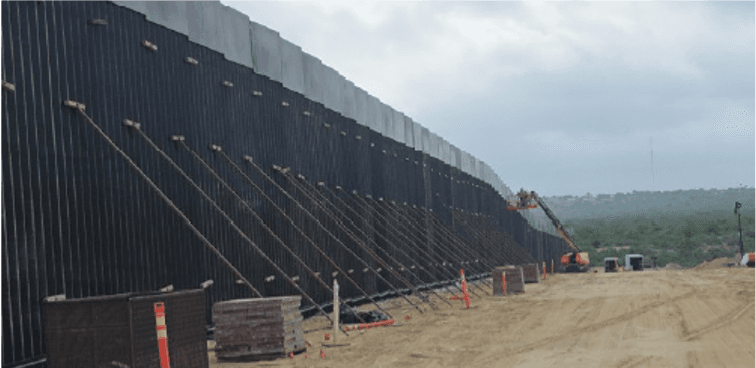
Steel bollard border wall
This is the type of 30-foot steel barrier proposed for construction through Big Bend National Park.
Photo: U.S. Customs and Border Protection
28 Federal Laws Waived
DHS publishes waivers in the Federal Register, bypassing the Wild and Scenic Rivers Act, the Endangered Species Act, the Native American Graves Protection and Repatriation Act, and 25 other environmental and cultural protection laws to expedite "Smart Wall" and physical barrier construction.
Maps Updated to "Primary Wall"
CBP updates project maps, reclassifying the Big Bend corridor from surveillance-only to "Primary Wall" — confirming steel bollard barrier construction through Big Bend National Park and Big Bend Ranch State Park.
Parsons Govt Services Awarded Contract
Parsons Government Services takes the construction contract for the "Big Bend 4" project: 112 miles from Santa Elena Canyon moving east past Rio Grande Village, plus 175 miles from Fort Quitman to Colorado Canyon.
Target Completion
Construction is slated for completion by early 2028. Environmental scientists note that impacts to ecosystems, cultural sites, dark skies, and public access may be irreversible once construction is complete.
Conservation Pledge
Add your name to the growing list of Americans who support protecting the ecological and cultural heritage of Big Bend.
Supporters and counting
You can also sign on Change.org
Support on Change.orgGet Involved
Learn, volunteer, donate, and attend educational events. There are many ways to support conservation and environmental education in the Big Bend region.
Learn & Share
Explore our research library of 827+ verified government sources on the environmental impact of proposed construction in the Big Bend region. Share educational materials with your community.
View Research →Support Conservation
Donations fund educational materials, environmental monitoring, conservation research, volunteer coordination, and community outreach events across Far West Texas.
Donate →Volunteer
Join our team of volunteers helping with educational events, environmental monitoring, habitat documentation, and community outreach in the Big Bend region.
Get Involved →Visit Big Bend
Experience the landscape firsthand. Visit Big Bend National Park, Big Bend Ranch State Park, and the Rio Grande to understand what makes this region ecologically and culturally irreplaceable.
See the Impact →Environmental Review & Public Comment
Federal infrastructure projects may include public comment periods under the National Environmental Policy Act (NEPA) and related statutes. BBPA provides nonpartisan educational resources to help community members understand and lawfully participate in these environmental review processes.
BBPA does not endorse or oppose political candidates. Our mission is environmental conservation and education.
Get Involved
Our conservation community is powered by people like you. Whether you want to volunteer your time, share information, or simply stay connected, there's a place for you here.
Volunteer
Whether you can give a few hours or a few days, there's a role for you. Help with education outreach, environmental monitoring, or event support.
Spread the Word
Share our educational resources on social media, host an informational gathering in your community, or help raise awareness about Big Bend conservation.
Share Resources
Have research, photography, historical knowledge, or media contacts that could help? We want to hear from you.
Reach Out to Us
Have information, resources, or just want to help? Fill out the form below. We read every message.
About the Alliance
DefendBigBend.com is the official hub of the Big Bend Protection Alliance (BBPA), a Texas nonprofit corporation. The Alliance coordinates regional conservation groups, cultural heritage organizations, and community members working together to protect the ecological and cultural integrity of the Big Bend region through education and public awareness.
Big Bend National Park is one of America's most remote and ecologically significant national parks, home to over 1,200 plant species, 450 bird species, and some of the darkest skies in North America. Research indicates that proposed infrastructure may bisect critical wildlife corridors, disrupt the Rio Grande watershed, and permanently alter the landscape of Santa Elena Canyon and the Chisos Mountains.
Our coalition, including NO AL MURO and NoBigBendWall.Org, supports conservation education through research, public awareness, environmental monitoring, and community engagement. All contributions support the BBPA's mission to keep Big Bend wild, open, and protected for future generations. Federal tax-exempt status is pending; donations may become tax-deductible retroactively if approved.